When a cavity is deep, patients often ask: “Can this tooth be saved with a simple filling, or do I need root canal treatment?” The answer cannot be decided from pain, or an X-ray, alone.
The short answer
In a filling vs root canal decision, the dentist considers four things: how much of the tooth is decayed, whether the dental pulp inside the tooth is still healthy enough to recover or is irreversibly diseased, whether infection has reached the bone around the root, and whether the tooth can be restored.
Clinical examination, dental X-rays and pulp sensibility tests are therefore critical in deciding the treatment plan.
At Ravi's Dental Care & Implant Centre in MVP Colony, Visakhapatnam, we do not recommend RCT simply because a cavity is deep. Our goal is to choose the most conservative treatment suitable for that tooth and preserve as much natural tooth as possible.
Filling vs Root Canal: What Is the Real Difference?
A filling repairs lost tooth structure. The dentist removes or manages the decayed tissue, seals the cavity and restores the tooth with a suitable filling material. The pulp stays in place and, when it is healthy or only reversibly irritated, it can recover.
A root canal treats disease within the tooth. The diseased pulp is removed, the canals are cleaned, disinfected and sealed, and the tooth receives a permanent restoration. A dental crown or other cuspal protection may be advised when substantial structure is lost.
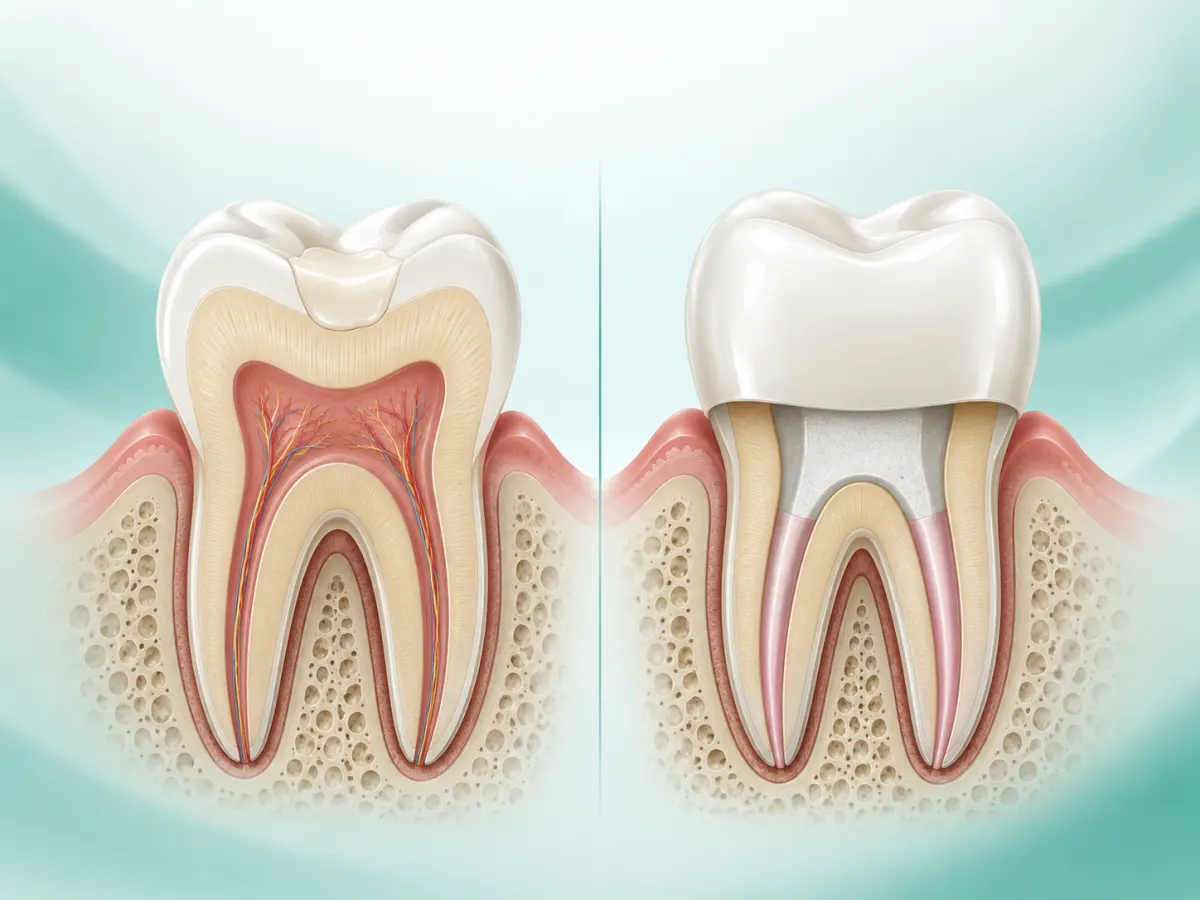
It is not only “How deep is the cavity?” It is “What is the condition of the pulp, how is it diagnosed, and can it be predictably preserved?”
Symptoms Give Clues, but They Do Not Make the Diagnosis
Signs that may point towards a filling
- Brief sensitivity to cold or sweets that settles quickly. This may occur with decay and a pulp that can recover (reversible damage).
- Food trapping or a visible hole in the tooth.
Keep in mind that some deep cavities cause no pain at all.
Signs that make a root canal more likely
- Spontaneous pain, or pain that wakes you at night
- Lingering pain after heat or cold
- Tenderness on biting
- Swelling or a gum boil
- Tooth discolouration
A dead pulp can be silent, so disappearing pain does not prove healing. These symptoms may also overlap with other conditions such as sensitivity from exposed dentine, a crack, gum recession, a loose filling or another tooth. Self-diagnosis is unreliable. Our guide to toothache warning signs explains which symptoms need prompt attention.
How Does a Dentist Decide Between a Deep Cavity Filling or RCT?
No single symptom gives a clear answer. Dentists combine the patient's history with several clinical and radiographic findings.
1. Pain history
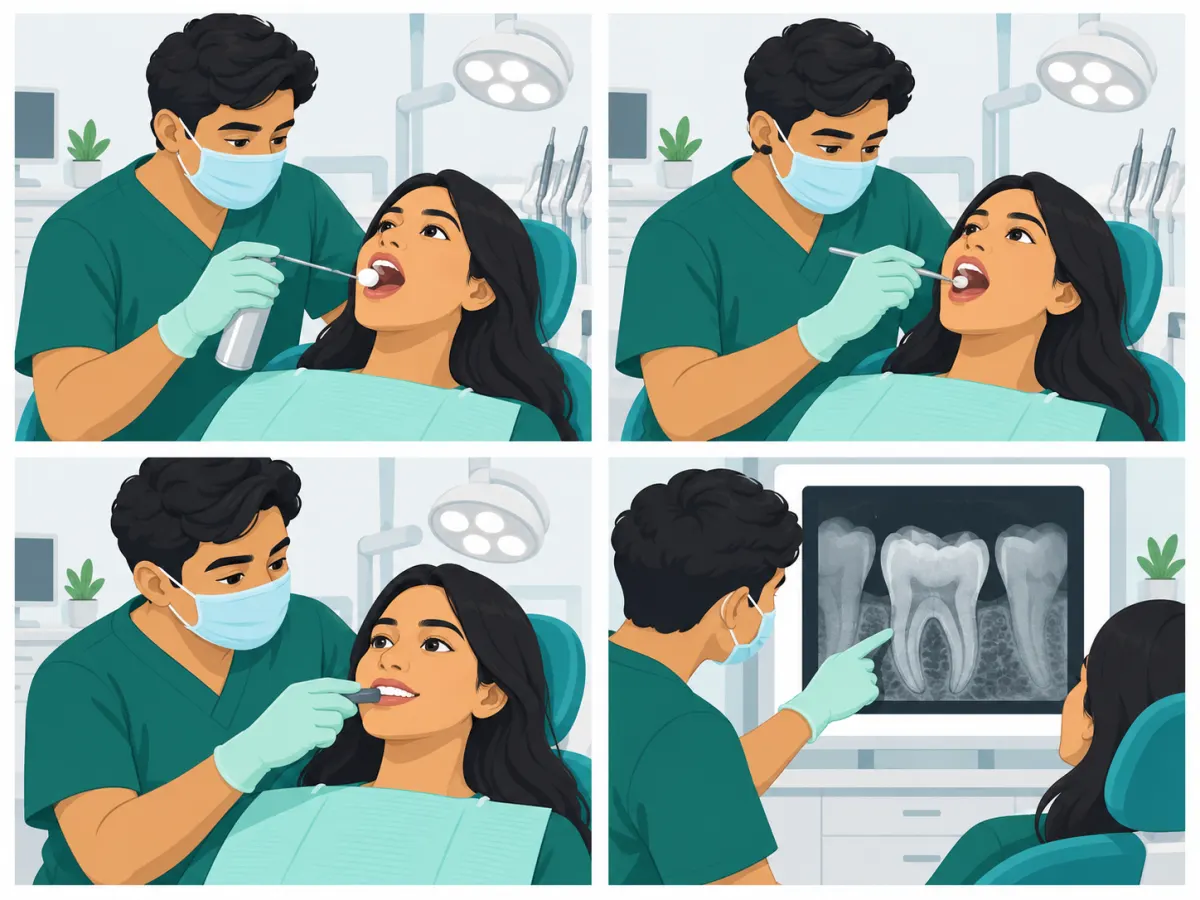
The dentist may ask whether cold or sweets cause sensitivity, whether pain stops quickly or lingers, whether it starts without a stimulus, wakes you at night or hurts while biting.
Short sensitivity can occur in a vital tooth and does not automatically mean RCT. Spontaneous or lingering pain raises concern about more advanced pulpal inflammation, but it still needs to be interpreted with examination and tests.
Importantly, no pain does not guarantee a healthy pulp. A severely damaged or necrotic pulp may sometimes cause little discomfort.
2. Clinical examination
The dentist checks the cavity, old fillings, cracks, fractures, leakage, tooth colour and remaining structure. Swelling, a sinus tract or localised gum changes may point towards deeper disease.
3. Pulp sensibility tests
A cold test, and sometimes an electric pulp test, is compared with control teeth. A brief response differs from one that lingers, or from no response. These tests measure nerve response, not blood supply, so they must be interpreted with other findings.
4. Percussion and bite tests
The dentist may tap the tooth or ask you to bite on a test object. Tenderness may indicate involvement of the tissues and bone around the root, or help identify a possible crack.
5. Dental X-ray
An X-ray helps show the depth of decay, old restorations, root anatomy and changes around the root tip. But it cannot directly tell whether the pulp is healthy. Early pulpal disease may exist before clear bone changes appear.
6. What is found during treatment
Sometimes the true depth becomes clear only after an old restoration and infected dentine are removed. If the pulp is exposed, tissue appearance and bleeding control under isolation help refine the plan.
7. Restorability and long-term prognosis
A tooth with too little sound structure, an untreatable crack or inadequate support may not be restorable. In that case, extraction and replacement, for example with a dental implant, may be discussed. The final plan must include how the tooth will be protected afterwards.
Filling vs Root Canal: A Simple Treatment Guide
| Finding | Possible treatment direction |
|---|---|
| Small or moderate cavity with normal pulp response | Filling |
| Deep cavity, vital tooth, no spontaneous pain | Conservative caries removal and restoration may be possible |
| Very deep cavity with pulp exposure in a suitable vital tooth | Vital pulp therapy or RCT, depending on findings |
| Spontaneous or lingering pain with concerning tests | Vital pulp therapy in selected cases, or RCT |
| Non-responsive pulp with signs of necrosis | RCT if the tooth is restorable |
| Swelling, sinus tract or infection around the root | RCT or another treatment based on restorability |
This table is only a guide; it cannot replace examination.
Can a Deep Cavity Be Treated Without RCT?
The most common question from patients is: can a filling avoid root canal treatment? Sometimes, yes. “Deep” on an X-ray does not automatically mean RCT. If the pulp can recover, the dentist may remove decay conservatively and place a well-sealed restoration.
If a living pulp is exposed, selected teeth may suit vital pulp therapy, such as pulp capping or pulpotomy. Suitability depends on diagnosis, contamination and bleeding control, restorability and a durable seal. Follow-up is essential. This conservative approach is in line with the European Society of Endodontology position statement on deep caries and the exposed pulp.
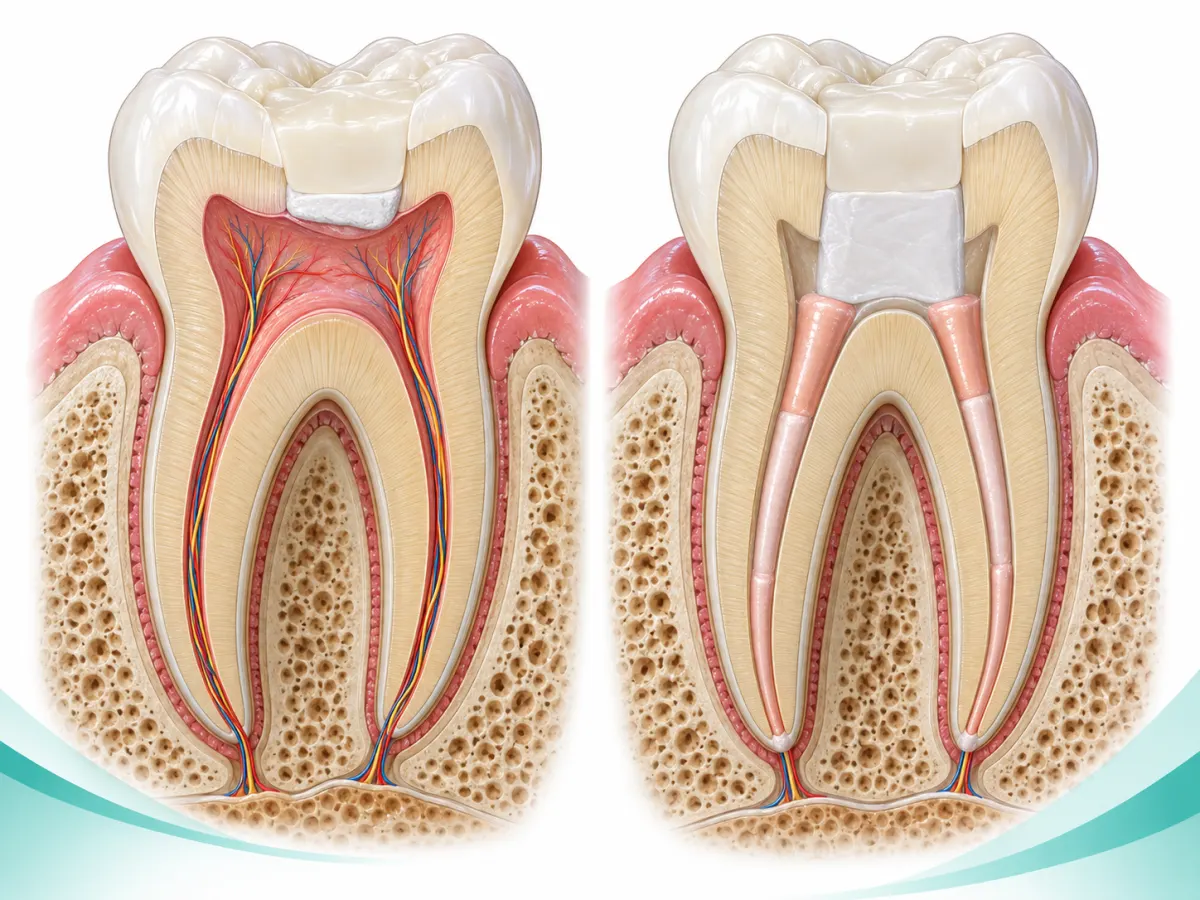
Avoiding RCT at any cost is not conservative dentistry. If the pulp is necrotic, there is established root infection, or the pulp cannot be predictably preserved, delaying root canal treatment may allow the disease to progress.
What Happens During Each Treatment?
During a filling
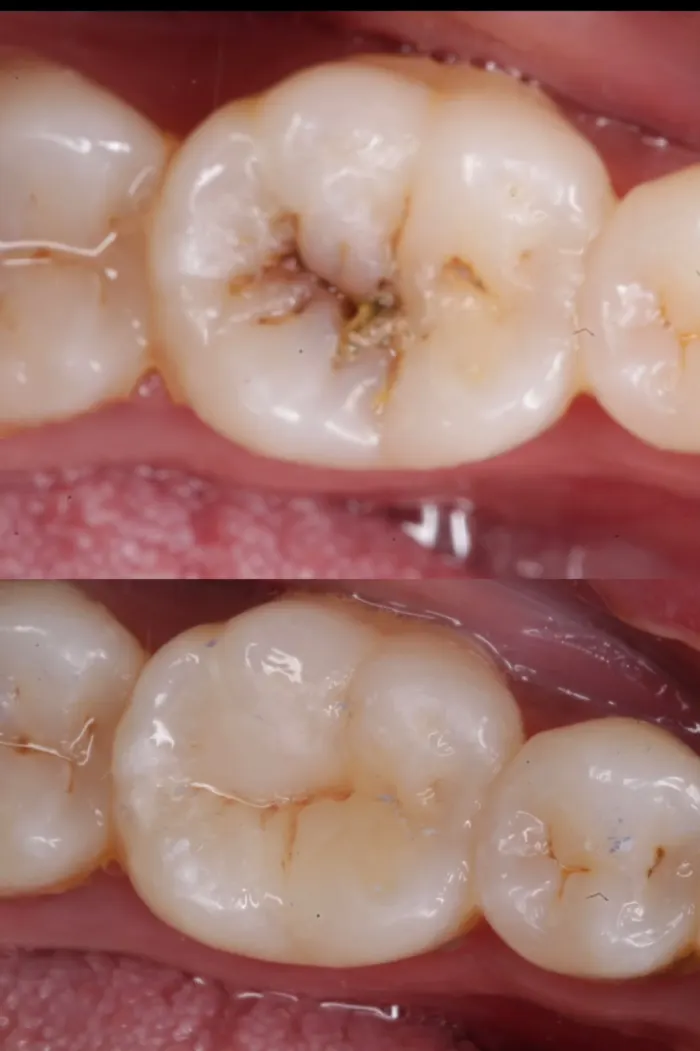
The tooth is numbed when required, isolated, cleaned conservatively and restored. The bite is checked before you leave. Learn more about tooth-coloured fillings in Vizag, or read our tooth filling guide for filling types and aftercare.
During root canal treatment
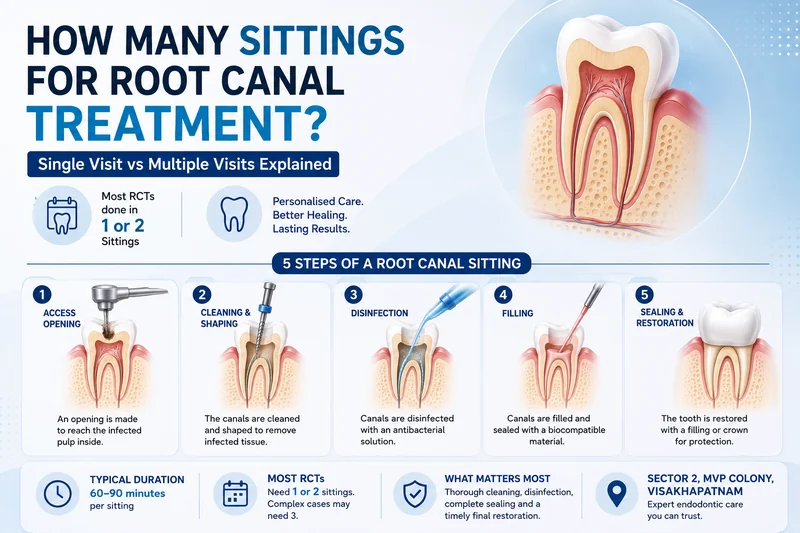
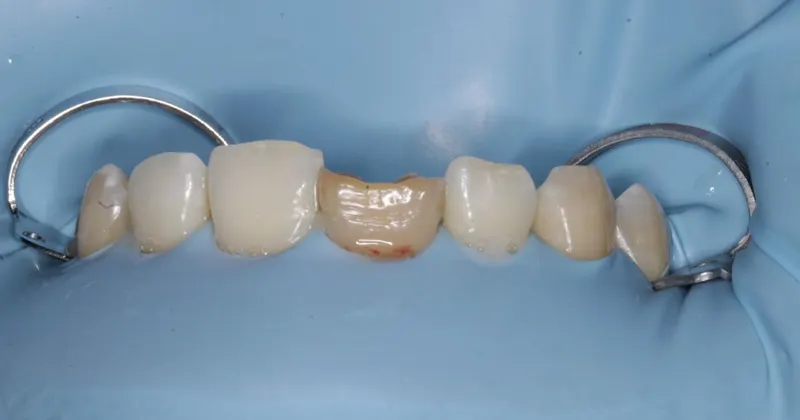
Local anaesthesia and rubber dam isolation are used; the pulp is removed and the canals are cleaned, disinfected and sealed. A permanent restoration is then planned. See our root canal treatment in Vizag page for the full procedure, and our guide on how many sittings a root canal needs.

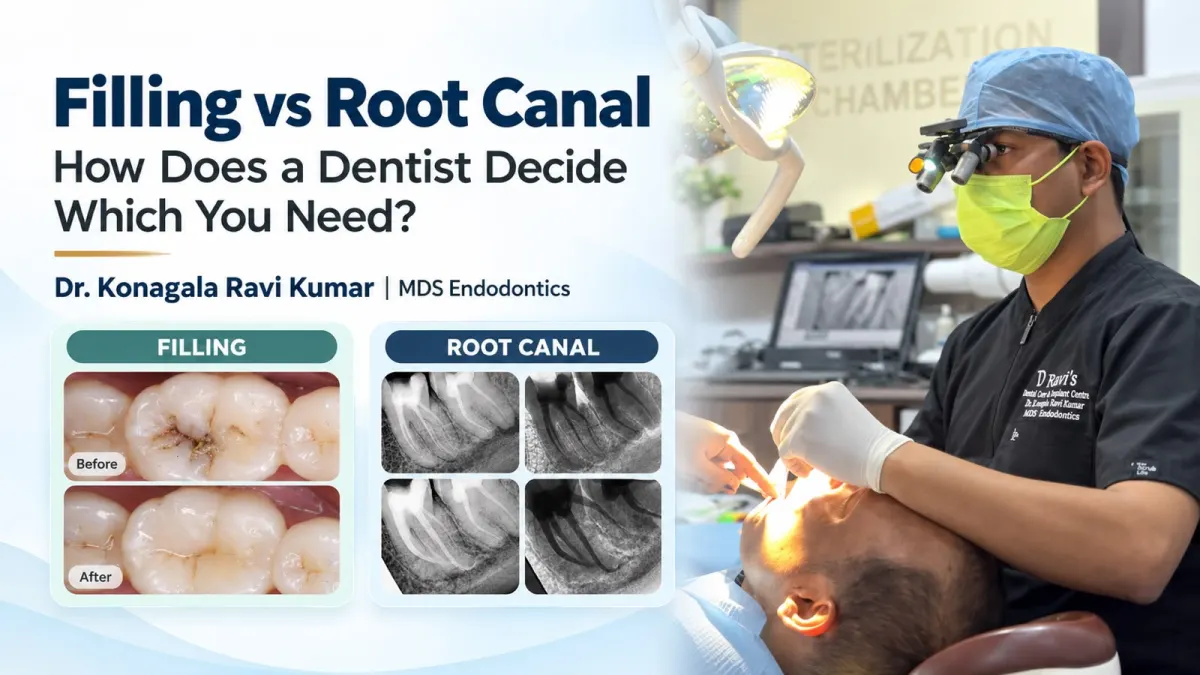
At Ravi's Dental Care & Implant Centre, Dr. Konagala Ravi Kumar, MDS in Conservative Dentistry & Endodontics, assesses these findings together, retaining healthy tooth and pulp where appropriate while treating irreversible disease.
What Should You Expect After Treatment?
After a deep filling, mild sensitivity may occur for a short time. Contact your dentist if:
- Pain increases or becomes spontaneous
- Pain lingers strongly after heat or cold
- Biting becomes increasingly painful
- Swelling develops
These signs mean the pulp should be reassessed.
After root canal treatment, the tooth needs a well-sealed final restoration. Depending on tooth position and remaining structure, this may be a filling, onlay or crown.
Filling vs Root Canal Cost: What Affects the Price?
A filling is generally less complex than RCT, but cost varies with cavity size, tooth position and restorative material.
Root canal treatment cost in Vizag varies with the tooth, canal anatomy, whether it is first-time treatment or re-treatment, the number of visits and the final restoration. The goal should be the least invasive option that also has a reasonable prognosis, not simply the cheapest treatment on the day.
Can a Filled Tooth Need Root Canal Treatment Later?
Yes. The pulp may not recover after a deep filling, or later decay, a crack or leakage may damage it. This does not automatically mean the filling was unnecessary; pulp response can evolve.
Attend the advised review after a very deep restoration, and return early if symptoms change.
Advised a filling or RCT and not sure why?
Send us your recent X-ray on WhatsApp, or call to book an assessment with our endodontist in MVP Colony.
When Should You Seek Urgent Care?
Arrange prompt dental assessment for:
- Severe or worsening toothache
- Facial or gum swelling
- A pimple-like swelling on the gum
- Fever with dental pain
- A broken tooth with significant pain
Our emergency dental care in Vizag team can see urgent cases.
If swelling is spreading rapidly or you have difficulty breathing or swallowing, seek urgent medical care.
The Key Message
The choice between a filling and root canal is not based on cavity size or pain alone. A careful diagnosis combines symptoms, examination, pulp sensibility tests and dental X-rays, then asks whether the pulp can be preserved and the tooth restored predictably.
Frequently Asked Questions
Book a Filling or Root Canal Assessment in Vizag
If you have been advised a filling or RCT and want to understand why, you can book an assessment at Ravi's Dental Care & Implant Centre, Door No 1-56-20, Sector 2, MVP Colony, Visakhapatnam (opposite SBI Bank). Bring any recent X-rays if available, and the findings and reasonable treatment options can be explained before you decide. We are open Monday to Sunday, 10 AM to 10 PM.
References
- Duncan HF, et al. European Society of Endodontology position statement: Management of deep caries and the exposed pulp. International Endodontic Journal, 2019.
- Duncan HF, et al. Treatment of pulpal and apical disease: the European Society of Endodontology (ESE) S3-level clinical practice guideline. International Endodontic Journal, 2023.

This article provides general patient education. Whether a tooth needs a filling, vital pulp therapy or root canal treatment can be confirmed only after clinical and radiographic examination of that tooth.