Re-Root Canal Treatment (Re-RCT) in Vizag Before You Lose the Tooth, Get a Second Opinion
Medically reviewed by Dr. Konagala Ravi Kumar, MDS – Conservative Dentistry & EndodonticsLast reviewed 17 August 2026
Has a dentist recommended extraction for your failed root canal? At Ravi's Dental Care & Implant Centre in MVP Colony, Visakhapatnam, we have saved 1000+ failed root canal teeth that other clinics called "hopeless" — using CBCT 3D planning, magnification-guided retreatment.
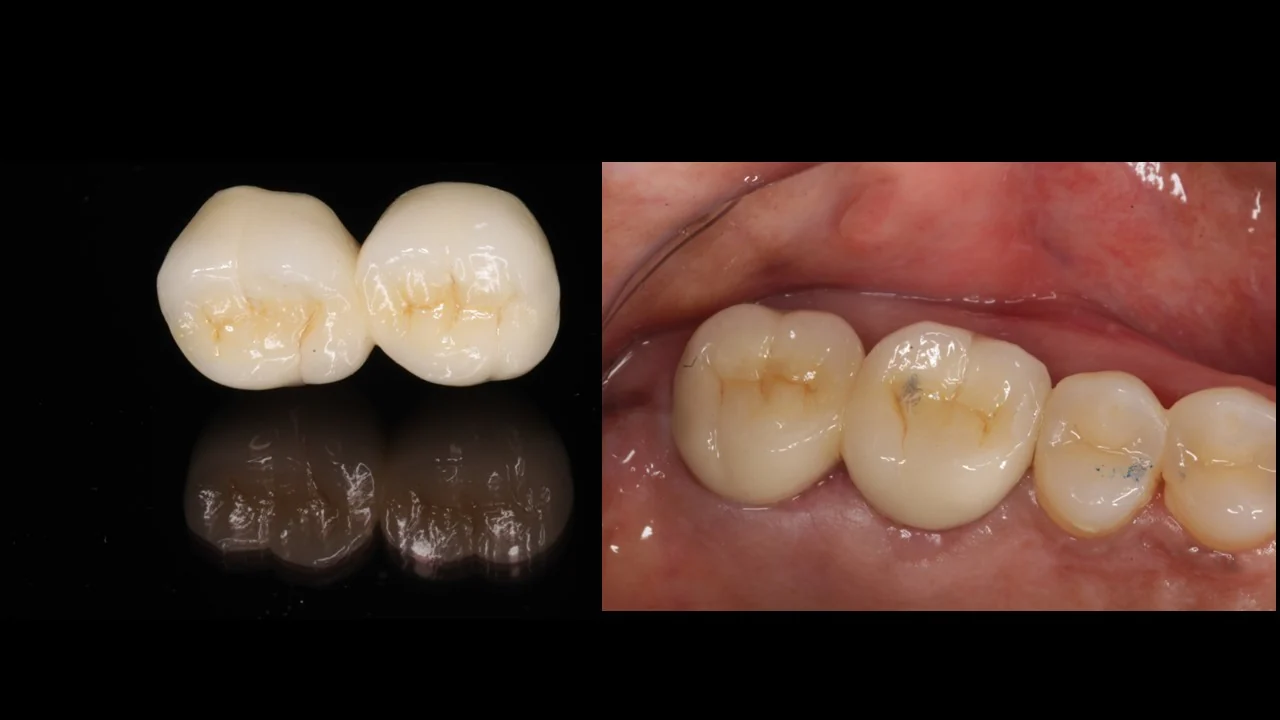
Still in Pain After a Root Canal? You May Need Re-RCT
You are not alone. Studies show 5–15% of root canal treatments fail due to persistent infection, missed canals, or new complications developing later.
Routine X-rays sometimes reveal "silent" periapical infections that have not yet caused pain. Early retreatment in these cases prevents a future dental emergency — and early intervention carries a substantially better success rate than delayed treatment.
Quick Facts
| Factor | Details |
|---|---|
| Success rate | 75–90% in suitable, well-selected cases |
| Saves the tooth from | Extraction and a considerably more expensive implant |
| Treatment time | 1–3 visits over 2–3 weeks |
| Recovery period | 3–7 days of mild discomfort |
| Cost range | ₹6,500–₹8,000 versus ₹50,000+ for an implant |
| How long it lasts | 10–15+ years with proper care and a good crown |
| Pain level | Minimal with modern anaesthesia |
What Is Re-Root Canal Treatment?
Re-root canal treatment — endodontic retreatment — is a second chance for a previously treated tooth that has not healed properly, or that has developed a new problem months or even years later.
What Happens During Re-RCT
- The tooth is carefully reopened
- Old root canal filling material is completely removed
- Extra or missed canals are located under magnification
- All canals are cleaned and disinfected again with advanced rotary instruments
- Canals are sealed tightly in three dimensions
- The tooth is restored with a new filling or crown for long-term protection
Why Might the First Root Canal Have Failed?
- Hidden or curved canals that were not cleaned completely
- Complex root anatomy or calcifications making cleaning difficult
- A temporary or final restoration that was delayed or leaked
- A new cavity or crack developing later
- Older techniques used without magnification or modern instruments
The good news is that modern technology-guided Re-RCT can address around 90% of these failures when performed by an experienced endodontist.
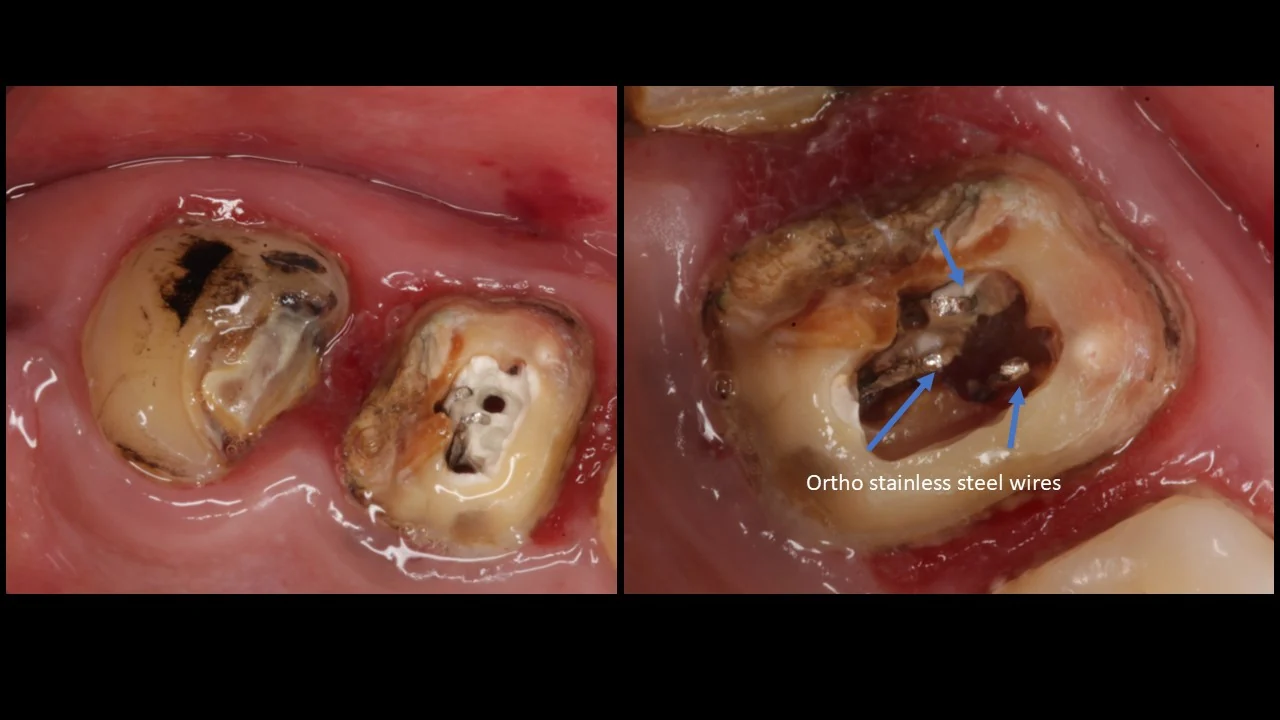
Magnification-Guided Re-RCT — Step by Step
A precise, patient-centred protocol using advanced endodontic technology at every stage.
Specialist Consultation & CBCT
- Detailed history of your previous treatment and current symptoms
- Clinical examination of tooth, gums and bite
- Digital X-rays and, where indicated, CBCT imaging
- Analysis of root anatomy, missed canals, fractures and extent of bone infection
Painless Anaesthesia & Access
- Local anaesthesia using modern techniques for genuine comfort
- Removal of the old crown or filling where needed
- Access opening under magnification to see canal entrances clearly
Removing Old Fillings, Posts & Broken Files
- Old gutta-percha and sealer removed from every canal
- Posts, cores or broken instruments removed wherever safe and advisable
- A clean pathway created to the full working length of each canal
Microscopic Cleaning & Disinfection
- Search for extra or missed canals under magnification
- Canals re-cleaned and shaped with modern rotary files
- Activated disinfectant irrigants used to remove bacteria and biofilm
- Medicaments placed inside canals where multi-visit treatment is needed
3D Sealing & Temporary Restoration
- Once infection-free and dry, canals are densely obturated again
- A temporary or interim restoration is placed on top
- A new crown, or replacement of the existing one, is planned for long-term sealing
Final Crown & Follow-Up
- Final core build-up and crown placed to protect the tooth
- Follow-up visits with clinical check and X-ray to monitor bone healing
- Non-surgical retreatment has a high success rate when done properly and followed up
Re-Root Canal Treatment Cost in Vizag
Re-RCT is significantly more affordable than extraction plus a dental implant, which makes it the economical choice for tooth preservation.
| Treatment Component | Cost Range (₹) | When It Applies |
|---|---|---|
| Re-RCT (anterior tooth) | ₹6,500 | Front teeth, single or fewer canals |
| Re-RCT (posterior tooth) | ₹7,000 – ₹8,000 | Molars and premolars with multiple canals |
| Post removal | ₹2,000 – ₹4,000 | Where a post or core must be removed first |
| Crown (ceramic / zirconia) | ₹6,000 – ₹15,000 | Essential for long-term protection |
| Total Re-RCT package | ₹12,500 – ₹23,000 | Retreatment plus new crown |
| Compare: extraction plus dental implant typically ₹45,000–₹70,000 • Written estimate after consultation and imaging | ||
Re-RCT vs Extraction + Implant
When the prognosis is good, saving your natural tooth is always our first choice. We show you your X-rays and explain your realistic options either way.
| Factor | Re-Root Canal Treatment | Extraction + Implant |
|---|---|---|
| Preserves natural tooth | Yes — maintains the original tooth | No — the tooth is removed permanently |
| Total cost in Vizag | ₹12,500 – ₹27,000 | ₹45,000 – ₹70,000 |
| Treatment duration | 2–3 weeks | 4–6 months including healing |
| Number of visits | 2–4 appointments | 6–8 appointments |
| Surgery required | No | Yes — extraction plus implant surgery |
| Pain / discomfort | Minimal with anaesthesia | Moderate post-surgical pain |
| Recovery time | 3–7 days | 1–2 weeks per surgery |
| Success rate | 75–90% in well-selected cases | 95%+ — but the tooth is lost |
| Longevity | 10–15+ years with a good crown | 15–25 years |
| Bone preservation | Maintains bone structure | Bone loss during healing |
| Chewing sensation | Natural tooth proprioception | Different feel — artificial |
| Best candidates | Healthy bone, no cracks, good tooth structure | Fractured teeth, severe bone loss |
Why Vizag Trusts Us for Root Canal Retreatment
Every month we see patients from across the city who were advised extraction elsewhere, or who had persistent pain after an old root canal.
Led by an MDS Endodontist
Dr. Konagala Ravi Kumar is an MDS in Conservative Dentistry & Endodontics and a Professor at GITAM Dental College.
Magnification-Assisted Retreatment
Magnification substantially improves our ability to locate missed canals and manage complex anatomy — the two most common reasons a first root canal fails.
Real-World Success Metrics
90% success in carefully selected cases • 85% of "hopeless" teeth saved from extraction • 75% cost saving versus implant treatment • 95% patient satisfaction on pain management.
Top-Rated for Root Canal Care
Multiple 5★ reviews specifically mention painless root canal with cap, careful pain feedback monitoring, and the gentle approach of Dr. Ravi and the team.
Hospital-Level Infection Control
As a multi-speciality clinic with strong sterilisation and patient-safety protocols, you get consistent infection control during every endodontic procedure.
Convenient MVP Colony Location
Sector 2, MVP Colony, near Medicover Hospital and SBI Bank. On the main road for easy auto or cab access, and close to the NH-16 exit.
We only recommend retreatment when the prognosis is genuinely favourable. If extraction is truly better for your long-term oral health, we tell you honestly. We advise against Re-RCT where there is a vertical root fracture extending below the gum line, severe bone loss above 70% around the roots, tooth structure too weak to support a crown afterwards, periodontal disease with advanced mobility, or medical conditions making lengthy treatment risky.
In those situations we openly discuss alternatives such as extraction with a dental implant or a bridge, and plan the most suitable treatment with you.
Aftercare Following Re-RCT
Proper aftercare is what turns a technically good retreatment into a tooth that lasts 15 years.
hrs
Mild soreness when biting for 3–7 days, slight gum tenderness and a dull ache are all normal. Take prescribed medication, avoid chewing on the treated side for 24 hours, stick to a soft diet for 2–3 days, use a cold compress if swelling appears, start salt water rinses after 24 hours, and sleep with your head elevated to reduce throbbing.
visits
Avoid hard and sticky foods — no nuts, caramel or chewing gum. Don't use the tooth for biting; use the opposite side. The temporary may feel rough, which is normal and will be replaced. Contact us if it falls out.
term
Brush twice daily and floss once daily, use interdental brushes around the crown margins, attend check-ups every six months for cleaning and X-ray, avoid biting ice or hard candy with the treated tooth, wear a nightguard if you grind, and get annual X-rays to monitor bone healing around the roots.
Severe, increasing pain not controlled by medication • Significant facial or neck swelling • Fever above 100°F • Any allergic reaction such as rash or difficulty breathing • A temporary filling that has fallen out.
+91 90592 26691 — WhatsApp support available.
Your Follow-Up Schedule
| Timeline | What We Check |
|---|---|
| 3 months post Re-RCT | Clinical exam, X-ray, bone healing assessment |
| 6 months | X-ray to monitor periapical bone regeneration |
| 12 months | Final success evaluation, compared against the baseline X-ray |
| Annual visits | Routine check-up and proactive problem detection |
Re-RCT FAQs — Vizag
Is Re-RCT more painful than the first root canal?
No. With modern anaesthesia and magnification-assisted techniques, most patients feel only mild discomfort or pressure — similar to, or sometimes less than, their first root canal. Post-operative soreness is usually manageable with routine painkillers.
Why can't I just remove the tooth and place an implant?
Extraction with an implant or bridge is a valid option, but Re-RCT is often less invasive and more conservative. Implants involve surgery, healing time and a higher overall cost. Saving your natural tooth is preferred whenever the prognosis is good — and we discuss transparently when Re-RCT, apicoectomy or an implant is the better long-term choice.
What is the success rate of Re-RCT?
Non-surgical endodontic retreatment has a high success rate — roughly 75–90% in suitable cases — with many teeth remaining functional for years, provided the diagnosis is correct, the canals are thoroughly cleaned and sealed, and the tooth receives a good crown and proper maintenance. We explain your individual prognosis based on your own X-rays, CBCT and clinical findings.
How many visits does Re-RCT take?
Simple retreatment sometimes takes 1–2 visits. Complex cases with large infections, posts or separated instruments may require 2–3 visits. Dr. Ravi outlines your exact plan after imaging and assessment, so you know before starting.
Will my old crown need to be changed?
Often yes — especially where there is decay under the crown, the crown doesn't fit well or leaks, or we need to access canals through or around it. A fresh, well-fitting crown greatly improves the long-term success of Re-RCT.
Is Re-RCT safe if my tooth has a post or a broken file?
Many such teeth can be retreated, but posts and broken instruments need careful handling under magnification. In some cases the risk of attempting removal outweighs the benefit. We show you the images, discuss the risks openly, and sometimes suggest alternatives such as apical surgery or extraction with an implant.
Should I see an endodontist rather than a general dentist?
If you have persistent symptoms in a root-treated tooth, a large or recurring infection on X-ray, or posts, broken instruments or complex anatomy, it is best to see an MDS endodontist with access to magnification, advanced imaging and specialised retreatment experience — all available here in MVP Colony.
Can you review my X-ray before I visit?
Yes. WhatsApp your X-ray to +91 90592 26691 and our endodontist will give you an honest preliminary assessment of whether your tooth looks retreatable — before you commit to travelling in or to any treatment.
Still in Pain After a Root Canal? Get a Specialist Opinion.
If your previously treated tooth is still hurting, swollen, or simply not feeling right, don't wait until extraction is the only option left. Bring your previous X-rays, reports, any removed crowns and old prescriptions — we'll review everything, take fresh images, and give you a clear, honest opinion on whether Re-RCT, apical surgery or an implant is best for your case.